
EV CHARGING OPERATIONS · 24/7 COVERAGE OPTIONS

Keep your charging network supported around the clock.

The challenge. A charger stops reporting after hours. Drivers or fleet staff need help, and the operator has to find out whether the charger is down, the site lost connectivity, or the platform lost visibility.

The solution. IQorix monitors your charging management system (CMS), triages faults, and coordinates the response with platform vendors, equipment manufacturers, and field teams. We support hotels, site hosts, municipalities, charging operators, and fleets, with 24/7 coverage for agreed sites and priorities.

Discuss EV charging coverage

Explore EV security & continuity

MonitoredBy IQorix24/7 coverage available

See what the charging team sees.

Review charger and port status, CMS alerts, and escalation ownership across supported hardware and platforms.

Explore the dashboard demos

MANAGED EV SECURITY & CONTINUITY

Your chargers are connected. Who protects the systems behind them?

Keeping chargers available and protecting their operating environment require different expertise. IQorix combines an IT and security background with hands-on EVSE and charging management system experience to help operators and site hosts address both.

Discuss an EV security review
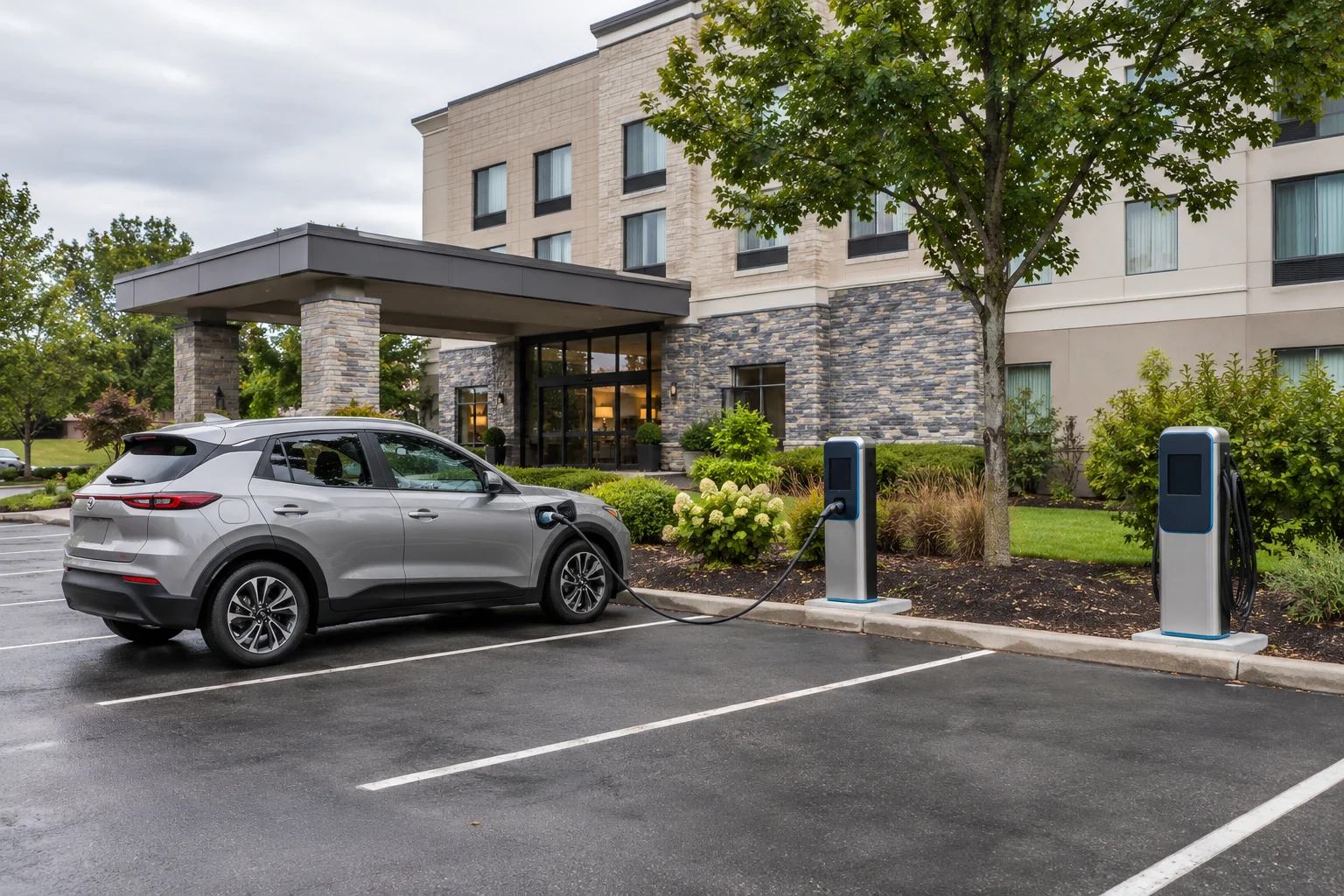
Illustrative hotel charging area with two charging pedestals and a connected electric vehicle

You trust an electrician to install the power for a payment terminal. Securing the payment system is a separate responsibility. EV charging deserves the same clear division of expertise, access, and accountability.

FOR CHARGING OPERATORS

Secure the access behind daily operations.

Review CMS administrator roles, remote vendor access, service accounts, API credentials, and the devices used to manage charging. Define who can change pricing, export records, or authorize remote actions, where those capabilities exist.

Who reviews privileged access when a person or provider leaves?

FOR HOTELS & SITE HOSTS

Give charging its own security boundaries.

Installing an electronic door lock is different from securing the system that issues guest keys. Identify how your charging equipment connects, whether it shares any property networks, and which customer information your team can access.

Who owns access, network separation, and escalation at your property?

FOR MUNICIPALITIES

Make responsibility clear across providers.

Installing a parking payment kiosk is different from protecting its network and administrative accounts. Document responsibilities across public charging, fleet operations, municipal IT, and external providers, with clear incident and recovery contacts.

Can every critical system and security action be traced to an owner?

ACCESS, CONNECTIONS & DATA

Ask how protection is verified.

A charger reporting online does not establish that its connections or administrator accounts are secure. We review the supported controls, available evidence, and division of responsibility with your platform and equipment providers.

An interception attack, sometimes called a man-in-the-middle attack, attempts to get between communicating systems to read or alter their traffic. The practical questions are whether connections are encrypted, endpoints are authenticated, and certificates are validated correctly.

Access and administrator devices
Named accounts, MFA where supported, least-privilege roles, protected devices, and a repeatable employee and vendor offboarding process.
Connections and remote support
Review network separation, supported secure charger-to-platform connections, certificate handling, remote access, and change records. Agree remediation with the responsible providers.
Customer and payment-related information
Map what is collected, visible, exported, and retained. Limit access and document handling requirements. Cardholder-data exposure and PCI responsibilities depend on the actual payment arrangement; they are assessed rather than assumed.
Evidence and accountability
Maintain an access register, responsibility matrix, prioritized findings, and remediation records. Coordinate formal PCI assessment with an appropriate assessor when required.

INCIDENT RESPONSE & RECOVERY

Know who acts when something goes wrong.

Turn security and continuity plans into a working response. Agree who contains an incident, who contacts the platform provider, what the site host needs to know, and how service restoration will be verified.

Plan your EV security and continuity review
Assess and prioritize
Map sites, systems, data, access, and provider dependencies. Deliver a practical risk register and an agreed action plan.
Implement and rehearse
Establish approved safeguards, escalation and communication plans, and recovery runbooks. Test available restores and rehearse an outage or compromised-account scenario within the agreed scope.
Maintain and report
Review access and open risks, track remediation, refresh contacts, and repeat agreed exercises. Ongoing management can follow the initial assessment and implementation work.

WHO WE SUPPORT

Keep charging available where people stay, park, and work.

Bring us one property or a network of sites. We work with your existing charging management system and agree who receives alerts, handles driver inquiries, and can authorize a site visit.

Hotels and hospitality groups
Help front-desk staff route charging issues without troubleshooting the equipment themselves. Monitor guest charging, coordinate with property management and vendors, and agree how to handle after-hours issues.
Site hosts and property managers
Track charger and port status at workplaces, retail properties, and parking facilities. Give site contacts an escalation path and coordinate approved vendor or field follow-up.
Municipalities and public agencies
Support public charging sites, municipal garages, and fleet depots. Organize incident records, coordinate platform and field vendors, and prepare availability and recurring-fault reports using agreed data and definitions.

CMS SUPPORT AND IOT MONITORING

See which sites and ports need attention.

IQorix is platform- and hardware-agnostic. We work with your existing charging management system and equipment, including mixed fleets. During onboarding, we confirm what each system exposes through approved access and where your alerts should go.

Site and port status
Review reported online or offline status, charger and connector availability, and gaps in telemetry. Flag differences between a reported fault and a loss of visibility.
Sessions and recurring faults
Review available session starts, failures, interruptions, fault codes, and repeat patterns. Group related issues by charger, site, or time window.
CMS support
Help with charger onboarding, site and port records, access roles, alert routing, and vendor escalation. Review available diagnostic logs and coordinate approved remote actions where supported.
IoT and connected site equipment
Monitor available signals from supported gateways, routers, sensors, or meters. Compare network and device status with CMS events to see where an issue may have started.

24/7 MONITORING AND RESPONSE

Give every after-hours alert an owner.

Choose coverage for the sites, systems, and priorities that need a response outside business hours. Your agreement sets monitoring, human triage, escalation, response targets, and dispatch arrangements.

From charging alert to incident closeout

  1. Detect

    Receive a supported CMS alert. Identify which port, charger, or site appears affected.

    Incident record
  2. Triage

    Review available fault, session, and network data to assess impact and choose the next step.

    Priority and evidence
  3. Act or escalate

    Follow the approved runbook or route the issue to the operator, provider, manufacturer, or field team.

    Assigned action
  4. Verify and close

    Check recovery signals. Record the result and assign any open or recurring issues for follow-up.

    Closeout record

See the charging continuity scenario

CUSTOM OPERATIONS DASHBOARDS

See what needs attention across your sites.

IQorix builds dashboards that bring available CMS, charger, IoT, and incident data into one view. Choose what operators, site hosts, or municipal teams need to see, from port status and last check-in to repeat faults and outstanding actions.

Explore custom dashboard development

IQorix charging operations dashboard

Illustrative data

Hotel garage
Available4 of 4 ports reporting available
Municipal fleet depot
InvestigateGateway last check-in 18 minutes ago. Network team assigned.
Retail parking site
Vendor follow-upOne port reports a repeat fault. Ticket open.

SITE ONBOARDING AND COMMISSIONING

Set up the first site before expanding coverage.

Our team brings hands-on experience with public and commercial charging deployments, commissioning coordination, equipment logistics, and day-to-day fault escalation. We use a representative site to validate how your platform, equipment, and field teams work together.

Explore rollout and field execution support

Build the site baseline
Record sites, chargers, ports, serials, connectivity, platform roles, vendor contacts, and commissioning status.
Test the handoff
Confirm that agreed telemetry and alerts reach the right people. Define the fault workflow, notification routes, and who can authorize remote action or field dispatch.
Deliver the operating record
Give your team a site support record, escalation matrix, open-items list, and repeatable onboarding checklist.

ANONYMIZED SOFTWARE EXAMPLES

See what our team built to improve charging operations.

These examples come from prior internal development work. Each shows how teams can use software alongside the charging platform to coordinate work across sites.

See the challenge, build, and outcome in the software portfolio

Charging operations workspace · deployed
Built site and equipment views and diagnostic log review so staff could look up equipment and review available fault history in one place.
Equipment and logistics workspace · working build
Built serial-level inventory, receiving, and shipment workflows to connect equipment and spares to their locations and movements.
Utility account and meter tracker · deployed
Built a record of utility accounts, meters, and billing-related information, with exports and backup and restore functions.
Reporting and dispatch · working prototypes
Built a filtered operations reporting prototype and a field-maintenance prototype with work orders, technician assignment, and a dispatch queue.

ILLUSTRATIVE AFTER-HOURS INCIDENT

Several chargers stop reporting at one site.

The operator wants to know whether the chargers are offline, whether the CMS has lost visibility, and who should take the next step.

Review
Compare CMS status and available session activity with site connectivity and any platform notices. Record the time, affected equipment, and evidence available.
Escalate
Notify the agreed contact and coordinate the next action under the runbook. If field work is needed, hand off the site details and diagnostics to the authorized provider.
Report
Confirm the agreed recovery signals and record timestamps, actions, owners, and any follow-up. Summarize availability and repeat-fault trends using agreed data and definitions.

FIRST CONVERSATION

Tell us what your charging network needs after hours.

Share your CMS, charger types, number of sites and ports, current escalation path, and the response you need outside business hours. We can scope a pilot site or a network-wide program.

Discuss EV charging coverage